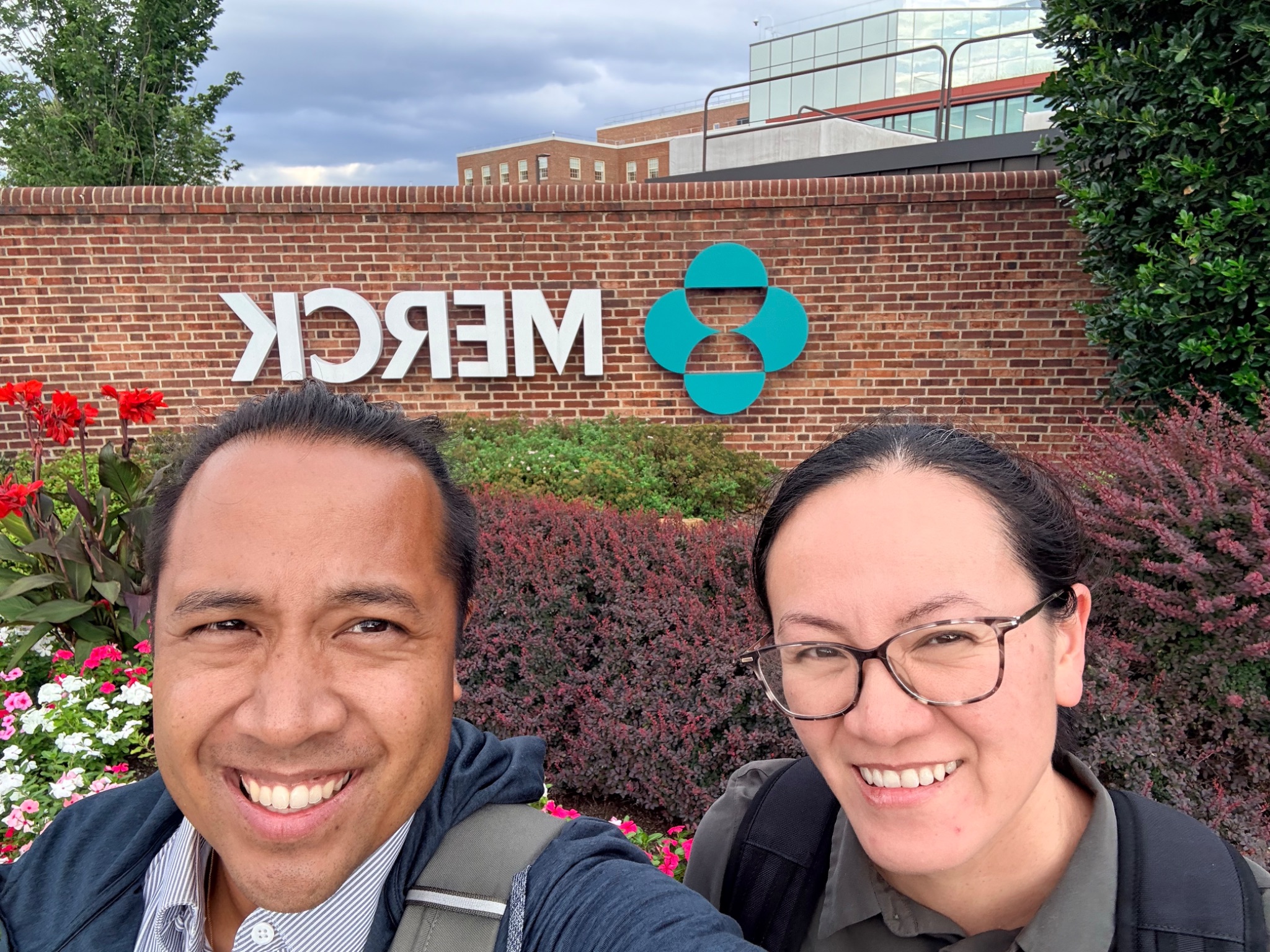
Most of what we learn about biomanufacturing doesn't come from our own lab. It comes from standing next to someone else's process while they explain why their analytics timeline doesn't fit it.
Last month that meant Merck's headquarters in New Jersey. We brought the portable P4SPR to demo antibody characterization for vaccine and mAb production, and spent the day with a cross-functional group — chemists, engineers, operations specialists — walking through how a real-time binding measurement would fit into their day. Good questions, the kind that come from people who actually run the equipment.
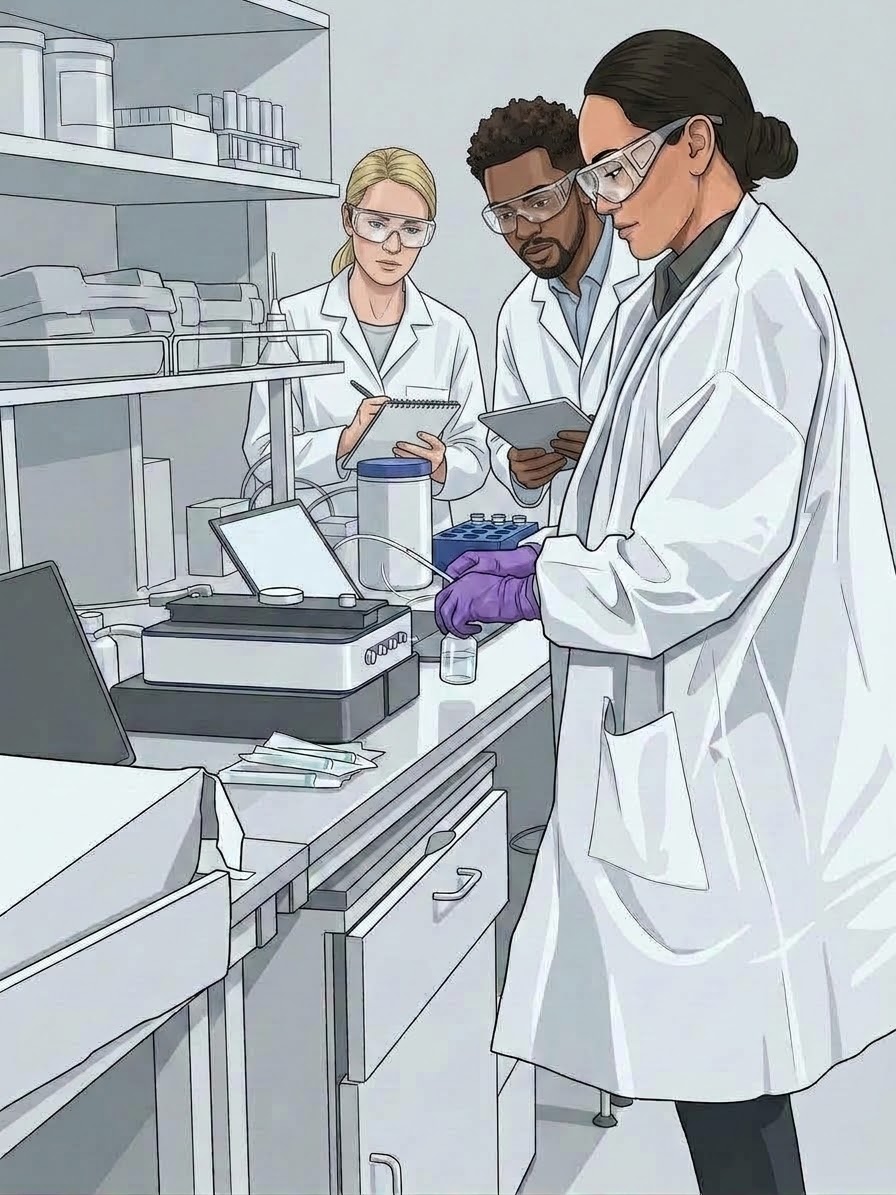
The P4SPR is about the size and weight of a textbook, which is the part people don't expect. Portability is the entire reason the measurement can happen where the material is, instead of three buildings away.
The gap we keep running into
Because that's the gap we keep running into, everywhere, not at any one site. Characterizing product quality during upstream production usually means ELISA or a conventional benchtop SPR: sample prep, transport to an offline QC lab, and a wait. The P4SPR was built for the other side of that — direct antibody characterization in crude broth, in-facility, while the run is still happening.
Last year at GSK, the numbers
Last year's visit to GSK put numbers on it, and that work is published: In-Facility mAb Characterization During Biomanufacturing with the P4SPR. Each SPR run took five minutes. The team screened more than twenty process conditions in under two hours, and the results tracked closely with active target concentration. Two hours, in the facility, instead of a QC cycle.
Two sites, a year apart, the same conversation both times. Everyone knows what they'd do with real-time analytics during a run. What's been missing is an instrument that will get on a train to New Jersey.
More stops to come.

— Affinité Instruments